

How connected dock scheduling software optimizes operations from booking to check-out
April 16, 2026

The Conduit Team

How connected dock scheduling software optimizes operations from booking to check-out
April 16, 2026
The Conduit Team
How connected dock scheduling software optimizes operations from booking to check-out
April 16, 2026
The Conduit Team
How connected dock scheduling software optimizes operations from booking to check-out
April 16, 2026
The Conduit Team
Dock scheduling can connect your 3PL’s operations to performance and financial objectives, supporting customer satisfaction and strong carrier relations—or it can be a black hole, where information is only as reliable as the last phone call or email your team actioned.
Keeping the docks running on time is a cornerstone of successful operations. When timing is off, throughput suffers, along with profitability and customer loyalty.
But the administrative burden of schedule management can be high. Manual efforts and disconnected tools that require workarounds put pressure on staff. They end up making ad-hoc decisions, reacting to exceptions with guesswork, and scrambling to keep operations on track.
Meanwhile, customers and carriers expect you to provide a seamless experience. As a service provider, you often bear the brunt of mistimed arrivals and changed or missed appointments. You know you owe it to your partners to handle everyday challenges with ease, but staying ahead of unknowns is difficult.
Dock scheduling software that connects appointments, check-ins, and yard management solves common challenges by providing a clear, system-led framework for arrivals, loading and unloading, and resource allocation.
This connected approach helps 3PLs drive efficiency by improving coordination and visibility across dock operations.
See Conduit Dock Scheduling: TAKE A SELF-SERVE TOUR
How dock scheduling software works
Digitized dock scheduling is centralized, automated, real-time, and connected to operational demand. It’s designed to provide everyone with the information they need to keep shipments moving efficiently.
Carriers book and manage appointments on an online portal
Require key fields and documents at booking so appointments are complete and ready to execute.
Facilities set site rules so trucks are only scheduled for times that work for your facility and resource availability.
Customize rules based on operating hours, dock capacity, staff and equipment, and specialized cargo needs.
Your warehouse dock schedule updates automatically in the system, providing staff with the info they need to prepare for shifts and execute upon arrivals.
Carriers and customers receive notifications to confirm and help keep them on schedule.
These capabilities can reduce scheduling related emails by up to 80%, relieving your staff from basic administrative burdens while also freeing them up for better decision making and coordination across operations.

Update schedules automatically
The reliability of digitized dock scheduling holds true when appointments change, too. Carriers can update or change appointments on their own, and your system updates calendars, notifications, and shipment statuses in real time. That flexibility is especially important when change occurs last minute and teams need to adjust without rebuilding the schedule.
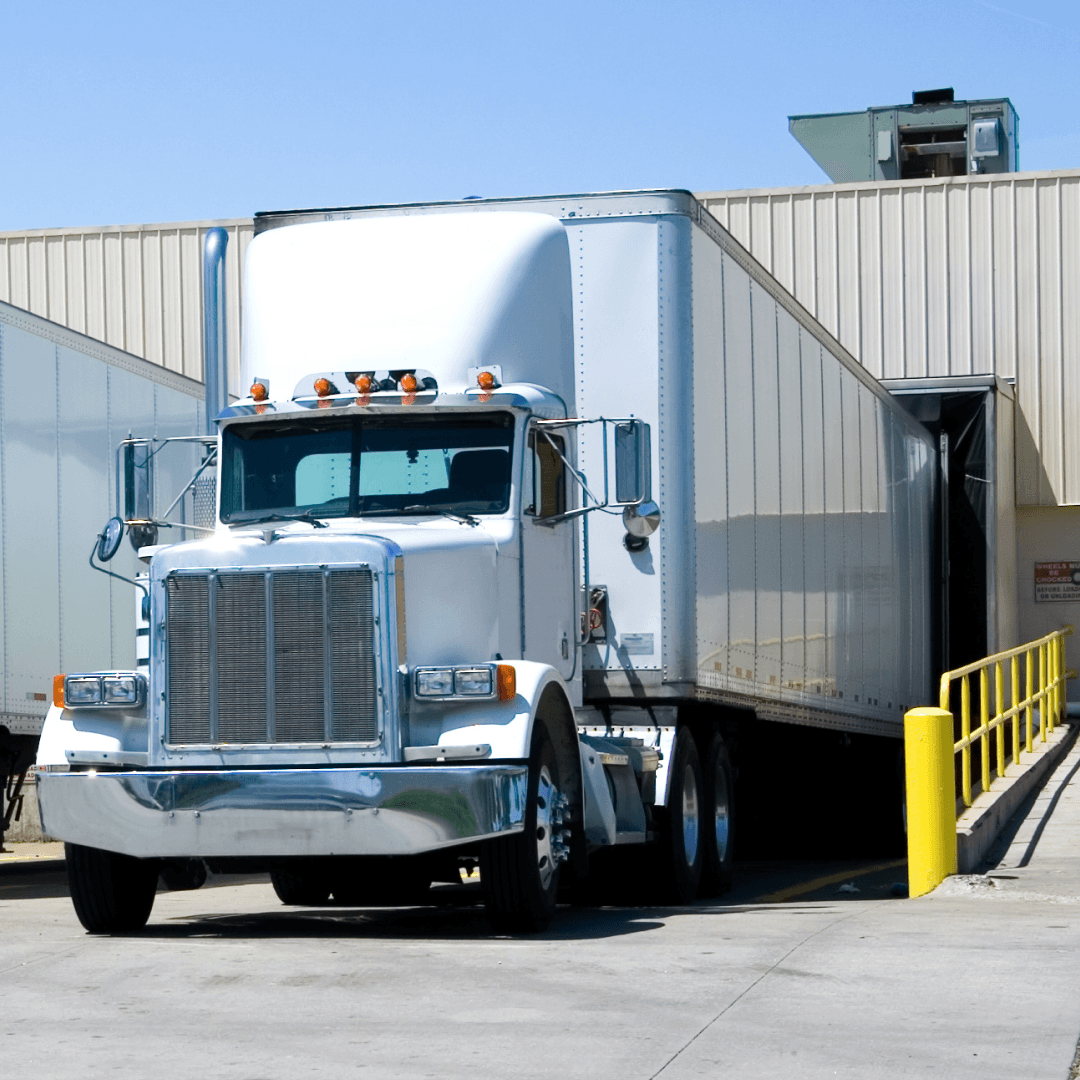
Staff can intervene to coordinate on-site as needed, because they’re equipped with correct, complete information. With system-led scheduling, it’s more likely they have the bandwidth to respond strategically, because they aren’t bogged down with phone calls, emails, or the mental tax of uncertainty.
A central, operational source of truth keeps everyone on the same page, so you can build efficiency and protect against resource and profit leakage.
Create efficiency gains across operations
Connected scheduling also creates efficiency gains across dock and yard activities. That’s because the scheduling workflow collects the right data for each shipment and connects it with the shipment records, streamlining information for actionability. Staff no longer have to hunt down data, risking lag and error, to have the context they need.
When drivers arrive, a contactless check-in system lets them input relevant information, including CDL scans, bills of lading, and other information you may require without ever leaving the truck. Check-in data attaches to appointment and shipment records, creating time-stamped proof of arrival, which helps mitigate the risks of fraud and detention exposure.

In yard management, you can see a real-time map of trailer locations and statuses to indicate optimal yard-to-dock flow and provide instructions to drivers on where to go.
This way, dock utilization stays optimized, avoiding the hidden costs of bottlenecks and gaps and keeping shipments moving through your facility.
When trucks finish loading or unloading, the system automatically updates dock door availability for the next truck, creating a continuous flow that staff can fully monitor and manage as needed.
Get performance insights from appointment data
Appointment data provides visibility into carrier and facility performance, giving logistics teams the metrics that drive operational efficiency.
Track on-time and late arrivals, cancellations, load rejections, and no-shows across carriers and facilities.
See who is creating appointments, how drivers check in, and how check-in timing clusters by day of week and hour of day.
Monitor dwell times and how dwell breaks down into waiting, loading/unloading, and idle time.
Across a multi-facility network, you can also compare performance by location, monitor data quality and document compliance, and track which appointment records are complete.

This makes it straightforward to identify which partners are reliable, which consistently underperform, and where you risk downstream impacts, such as detention fees. These data points also give operators a basis to hold carriers accountable, optimize dock throughput, and reduce the friction that turns scheduled appointments into operational bottlenecks.
Improve partnerships with schedule integrity
The efficiencies of dock scheduling do more than keep your site running smoothly. They can positively impact carrier relations and customer satisfaction.
Carriers appreciate processes that provide efficiency, shared control, and visibility, because it empowers them to optimize their activities and financial performance, too. Sidestepping the complications of phone and email scheduling may also avoid risk for 3PLs, since a smoother scheduling experience makes it easier to maintain strong carrier relationships. That’s because carriers may silently penalize 3PLs that create friction for their operations by introducing rate hikes and increasing or refusing spot rates.

Additionally, customer satisfaction often rests on timely performance. When bottlenecks threaten supply chain integrity, it’s not just your customers that may suffer—it’s their customers, too, and many of those end customers have strict requirements for on-time, in-full deliveries. Failing to meet those requirements can hurt service levels and customer relationships.
Digitized dock scheduling mitigates these risks across partnerships. The gains in clarity and efficiency let you optimize truck turns and keep throughput high, so you can maintain valuable relationships.
Explore Conduit Dock Scheduling
Conduit Dock Scheduling is designed to fit any dock operations, providing flexibility and fast implementation so you can quickly start gaining efficiency.
For 3PLs that are scaling or right-sizing technology to operations, you can implement dock scheduling as a modular solution. Teams can start with scheduling and then expand, allowing you to evolve into a more streamlined tech stack that scales to your volume and margins. Combined with driver check-in and yard management, dock scheduling becomes part of a connected, value-driven system.
As logistics continues to digitize across more touchpoints, Dock Scheduling can help 3PLs build the systems that improve performance while meeting carrier and customer expectations.
Dock scheduling can connect your 3PL’s operations to performance and financial objectives, supporting customer satisfaction and strong carrier relations—or it can be a black hole, where information is only as reliable as the last phone call or email your team actioned.
Keeping the docks running on time is a cornerstone of successful operations. When timing is off, throughput suffers, along with profitability and customer loyalty.
But the administrative burden of schedule management can be high. Manual efforts and disconnected tools that require workarounds put pressure on staff. They end up making ad-hoc decisions, reacting to exceptions with guesswork, and scrambling to keep operations on track.
Meanwhile, customers and carriers expect you to provide a seamless experience. As a service provider, you often bear the brunt of mistimed arrivals and changed or missed appointments. You know you owe it to your partners to handle everyday challenges with ease, but staying ahead of unknowns is difficult.
Dock scheduling software that connects appointments, check-ins, and yard management solves common challenges by providing a clear, system-led framework for arrivals, loading and unloading, and resource allocation.
This connected approach helps 3PLs drive efficiency by improving coordination and visibility across dock operations.
See Conduit Dock Scheduling: TAKE A SELF-SERVE TOUR
How dock scheduling software works
Digitized dock scheduling is centralized, automated, real-time, and connected to operational demand. It’s designed to provide everyone with the information they need to keep shipments moving efficiently.
Carriers book and manage appointments on an online portal
Require key fields and documents at booking so appointments are complete and ready to execute.
Facilities set site rules so trucks are only scheduled for times that work for your facility and resource availability.
Customize rules based on operating hours, dock capacity, staff and equipment, and specialized cargo needs.
Your warehouse dock schedule updates automatically in the system, providing staff with the info they need to prepare for shifts and execute upon arrivals.
Carriers and customers receive notifications to confirm and help keep them on schedule.
These capabilities can reduce scheduling related emails by up to 80%, relieving your staff from basic administrative burdens while also freeing them up for better decision making and coordination across operations.
Update schedules automatically
The reliability of digitized dock scheduling holds true when appointments change, too. Carriers can update or change appointments on their own, and your system updates calendars, notifications, and shipment statuses in real time. That flexibility is especially important when change occurs last minute and teams need to adjust without rebuilding the schedule.
Staff can intervene to coordinate on-site as needed, because they’re equipped with correct, complete information. With system-led scheduling, it’s more likely they have the bandwidth to respond strategically, because they aren’t bogged down with phone calls, emails, or the mental tax of uncertainty.
A central, operational source of truth keeps everyone on the same page, so you can build efficiency and protect against resource and profit leakage.
Create efficiency gains across operations
Connected scheduling also creates efficiency gains across dock and yard activities. That’s because the scheduling workflow collects the right data for each shipment and connects it with the shipment records, streamlining information for actionability. Staff no longer have to hunt down data, risking lag and error, to have the context they need.
When drivers arrive, a contactless check-in system lets them input relevant information, including CDL scans, bills of lading, and other information you may require without ever leaving the truck. Check-in data attaches to appointment and shipment records, creating time-stamped proof of arrival, which helps mitigate the risks of fraud and detention exposure.
In yard management, you can see a real-time map of trailer locations and statuses to indicate optimal yard-to-dock flow and provide instructions to drivers on where to go.
This way, dock utilization stays optimized, avoiding the hidden costs of bottlenecks and gaps and keeping shipments moving through your facility.
When trucks finish loading or unloading, the system automatically updates dock door availability for the next truck, creating a continuous flow that staff can fully monitor and manage as needed.
Get performance insights from appointment data
Appointment data provides visibility into carrier and facility performance, giving logistics teams the metrics that drive operational efficiency.
Track on-time and late arrivals, cancellations, load rejections, and no-shows across carriers and facilities.
See who is creating appointments, how drivers check in, and how check-in timing clusters by day of week and hour of day.
Monitor dwell times and how dwell breaks down into waiting, loading/unloading, and idle time.
Across a multi-facility network, you can also compare performance by location, monitor data quality and document compliance, and track which appointment records are complete.
This makes it straightforward to identify which partners are reliable, which consistently underperform, and where you risk downstream impacts, such as detention fees. These data points also give operators a basis to hold carriers accountable, optimize dock throughput, and reduce the friction that turns scheduled appointments into operational bottlenecks.
Improve partnerships with schedule integrity
The efficiencies of dock scheduling do more than keep your site running smoothly. They can positively impact carrier relations and customer satisfaction.
Carriers appreciate processes that provide efficiency, shared control, and visibility, because it empowers them to optimize their activities and financial performance, too. Sidestepping the complications of phone and email scheduling may also avoid risk for 3PLs, since a smoother scheduling experience makes it easier to maintain strong carrier relationships. That’s because carriers may silently penalize 3PLs that create friction for their operations by introducing rate hikes and increasing or refusing spot rates.
Additionally, customer satisfaction often rests on timely performance. When bottlenecks threaten supply chain integrity, it’s not just your customers that may suffer—it’s their customers, too, and many of those end customers have strict requirements for on-time, in-full deliveries. Failing to meet those requirements can hurt service levels and customer relationships.
Digitized dock scheduling mitigates these risks across partnerships. The gains in clarity and efficiency let you optimize truck turns and keep throughput high, so you can maintain valuable relationships.
Explore Conduit Dock Scheduling
Conduit Dock Scheduling is designed to fit any dock operations, providing flexibility and fast implementation so you can quickly start gaining efficiency.
For 3PLs that are scaling or right-sizing technology to operations, you can implement dock scheduling as a modular solution. Teams can start with scheduling and then expand, allowing you to evolve into a more streamlined tech stack that scales to your volume and margins. Combined with driver check-in and yard management, dock scheduling becomes part of a connected, value-driven system.
As logistics continues to digitize across more touchpoints, Dock Scheduling can help 3PLs build the systems that improve performance while meeting carrier and customer expectations.
Dock scheduling can connect your 3PL’s operations to performance and financial objectives, supporting customer satisfaction and strong carrier relations—or it can be a black hole, where information is only as reliable as the last phone call or email your team actioned.
Keeping the docks running on time is a cornerstone of successful operations. When timing is off, throughput suffers, along with profitability and customer loyalty.
But the administrative burden of schedule management can be high. Manual efforts and disconnected tools that require workarounds put pressure on staff. They end up making ad-hoc decisions, reacting to exceptions with guesswork, and scrambling to keep operations on track.
Meanwhile, customers and carriers expect you to provide a seamless experience. As a service provider, you often bear the brunt of mistimed arrivals and changed or missed appointments. You know you owe it to your partners to handle everyday challenges with ease, but staying ahead of unknowns is difficult.
Dock scheduling software that connects appointments, check-ins, and yard management solves common challenges by providing a clear, system-led framework for arrivals, loading and unloading, and resource allocation.
This connected approach helps 3PLs drive efficiency by improving coordination and visibility across dock operations.
See Conduit Dock Scheduling: TAKE A SELF-SERVE TOUR
How dock scheduling software works
Digitized dock scheduling is centralized, automated, real-time, and connected to operational demand. It’s designed to provide everyone with the information they need to keep shipments moving efficiently.
Carriers book and manage appointments on an online portal
Require key fields and documents at booking so appointments are complete and ready to execute.
Facilities set site rules so trucks are only scheduled for times that work for your facility and resource availability.
Customize rules based on operating hours, dock capacity, staff and equipment, and specialized cargo needs.
Your warehouse dock schedule updates automatically in the system, providing staff with the info they need to prepare for shifts and execute upon arrivals.
Carriers and customers receive notifications to confirm and help keep them on schedule.
These capabilities can reduce scheduling related emails by up to 80%, relieving your staff from basic administrative burdens while also freeing them up for better decision making and coordination across operations.
Update schedules automatically
The reliability of digitized dock scheduling holds true when appointments change, too. Carriers can update or change appointments on their own, and your system updates calendars, notifications, and shipment statuses in real time. That flexibility is especially important when change occurs last minute and teams need to adjust without rebuilding the schedule.
Staff can intervene to coordinate on-site as needed, because they’re equipped with correct, complete information. With system-led scheduling, it’s more likely they have the bandwidth to respond strategically, because they aren’t bogged down with phone calls, emails, or the mental tax of uncertainty.
A central, operational source of truth keeps everyone on the same page, so you can build efficiency and protect against resource and profit leakage.
Create efficiency gains across operations
Connected scheduling also creates efficiency gains across dock and yard activities. That’s because the scheduling workflow collects the right data for each shipment and connects it with the shipment records, streamlining information for actionability. Staff no longer have to hunt down data, risking lag and error, to have the context they need.
When drivers arrive, a contactless check-in system lets them input relevant information, including CDL scans, bills of lading, and other information you may require without ever leaving the truck. Check-in data attaches to appointment and shipment records, creating time-stamped proof of arrival, which helps mitigate the risks of fraud and detention exposure.
In yard management, you can see a real-time map of trailer locations and statuses to indicate optimal yard-to-dock flow and provide instructions to drivers on where to go.
This way, dock utilization stays optimized, avoiding the hidden costs of bottlenecks and gaps and keeping shipments moving through your facility.
When trucks finish loading or unloading, the system automatically updates dock door availability for the next truck, creating a continuous flow that staff can fully monitor and manage as needed.
Get performance insights from appointment data
Appointment data provides visibility into carrier and facility performance, giving logistics teams the metrics that drive operational efficiency.
Track on-time and late arrivals, cancellations, load rejections, and no-shows across carriers and facilities.
See who is creating appointments, how drivers check in, and how check-in timing clusters by day of week and hour of day.
Monitor dwell times and how dwell breaks down into waiting, loading/unloading, and idle time.
Across a multi-facility network, you can also compare performance by location, monitor data quality and document compliance, and track which appointment records are complete.
This makes it straightforward to identify which partners are reliable, which consistently underperform, and where you risk downstream impacts, such as detention fees. These data points also give operators a basis to hold carriers accountable, optimize dock throughput, and reduce the friction that turns scheduled appointments into operational bottlenecks.
Improve partnerships with schedule integrity
The efficiencies of dock scheduling do more than keep your site running smoothly. They can positively impact carrier relations and customer satisfaction.
Carriers appreciate processes that provide efficiency, shared control, and visibility, because it empowers them to optimize their activities and financial performance, too. Sidestepping the complications of phone and email scheduling may also avoid risk for 3PLs, since a smoother scheduling experience makes it easier to maintain strong carrier relationships. That’s because carriers may silently penalize 3PLs that create friction for their operations by introducing rate hikes and increasing or refusing spot rates.
Additionally, customer satisfaction often rests on timely performance. When bottlenecks threaten supply chain integrity, it’s not just your customers that may suffer—it’s their customers, too, and many of those end customers have strict requirements for on-time, in-full deliveries. Failing to meet those requirements can hurt service levels and customer relationships.
Digitized dock scheduling mitigates these risks across partnerships. The gains in clarity and efficiency let you optimize truck turns and keep throughput high, so you can maintain valuable relationships.
Explore Conduit Dock Scheduling
Conduit Dock Scheduling is designed to fit any dock operations, providing flexibility and fast implementation so you can quickly start gaining efficiency.
For 3PLs that are scaling or right-sizing technology to operations, you can implement dock scheduling as a modular solution. Teams can start with scheduling and then expand, allowing you to evolve into a more streamlined tech stack that scales to your volume and margins. Combined with driver check-in and yard management, dock scheduling becomes part of a connected, value-driven system.
As logistics continues to digitize across more touchpoints, Dock Scheduling can help 3PLs build the systems that improve performance while meeting carrier and customer expectations.
Get Started
Resources
Contact
Copyright © 2026. All Rights Reserved
Copyright © 2026. All Rights Reserved
🇺🇸 Based in the USA
🇺🇸 Based in the USA